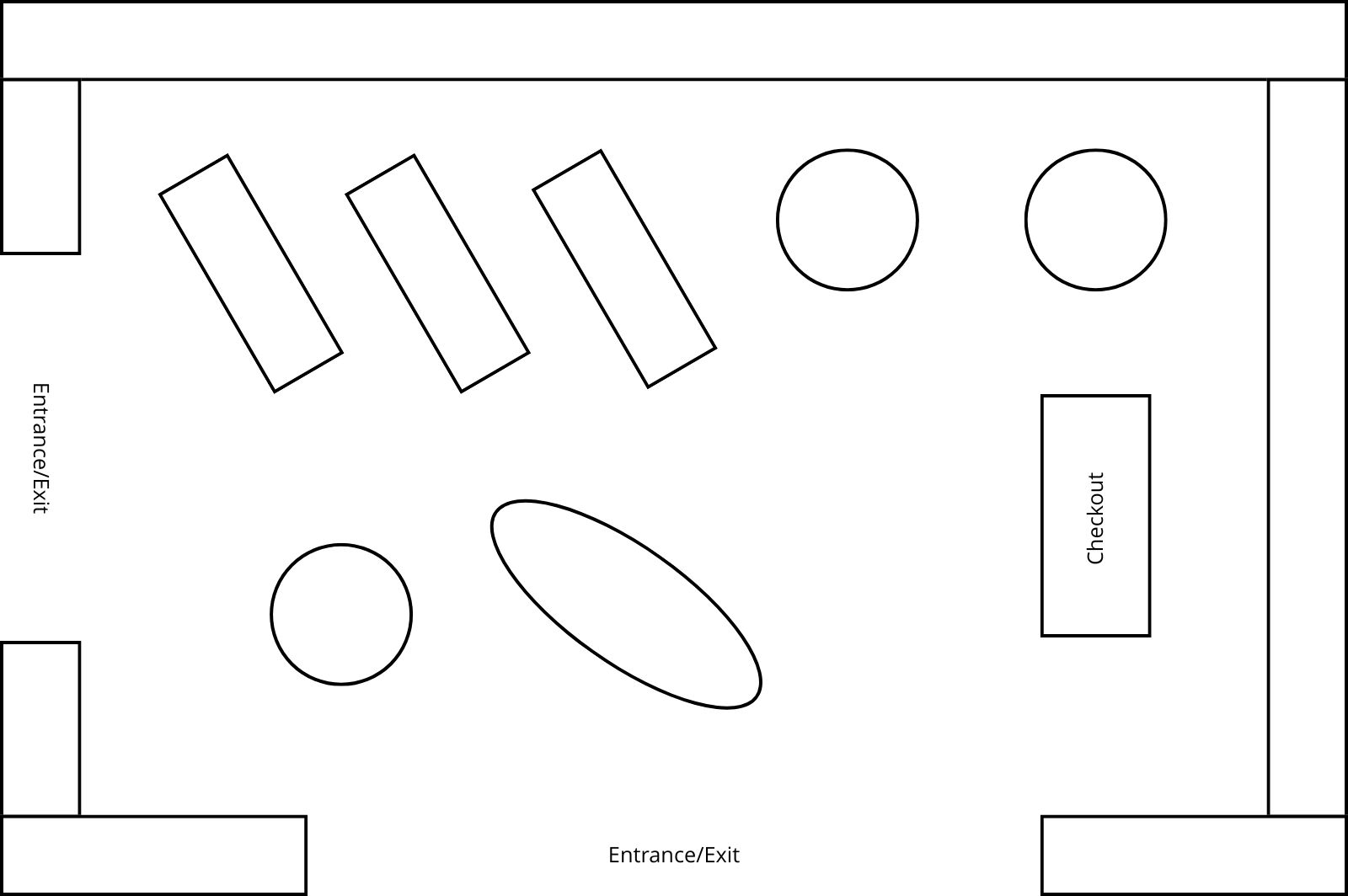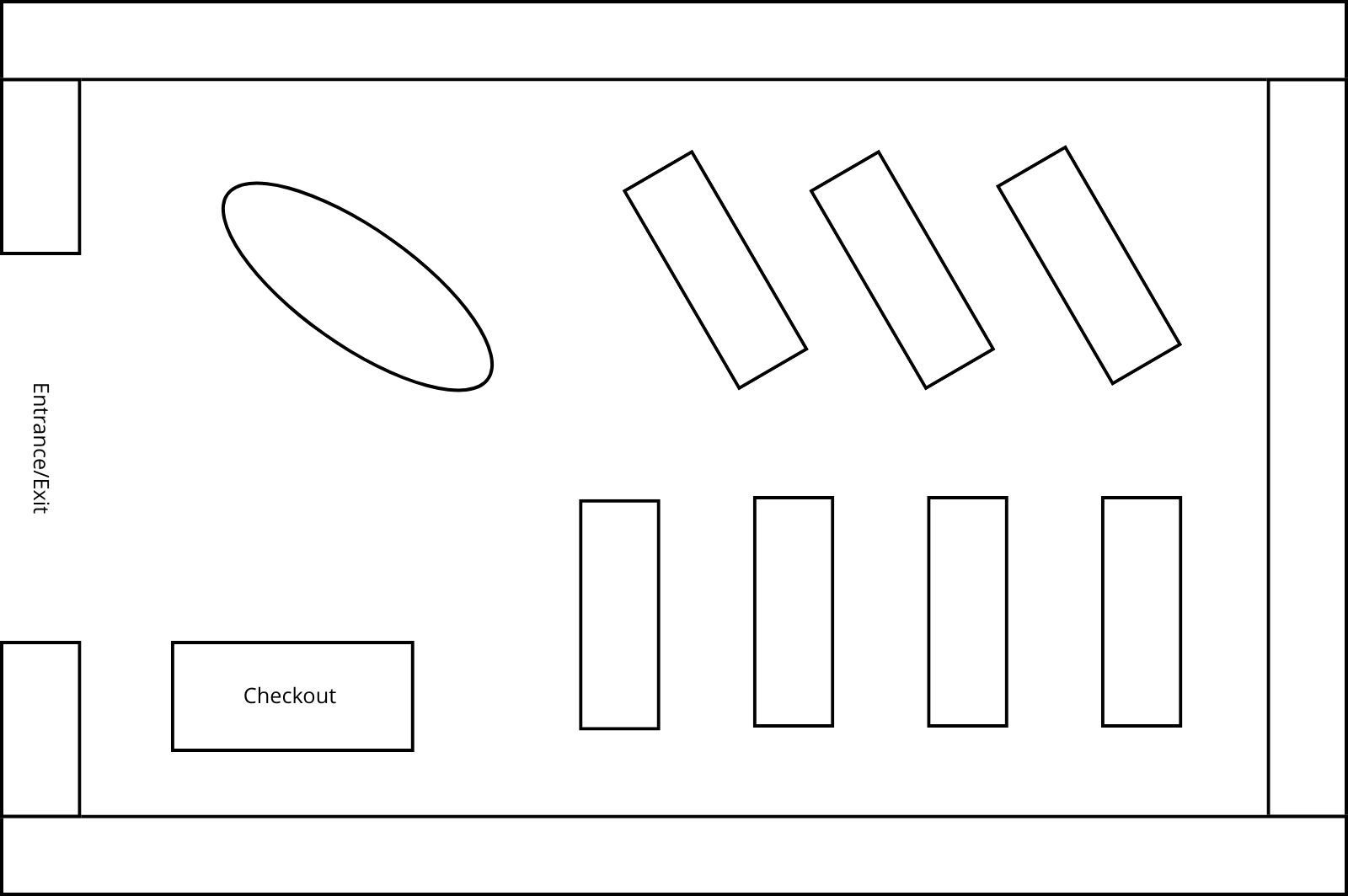

Key Takeaway: The right store layout helps customers move naturally through your space, notice more products, and enjoy a better shopping experience, but the best layout depends on your store type, your products, and how you want people to interact with the space.
–
The way your store is laid out can have a big impact on how customers move through the space, what they notice, and how easy the overall shopping experience feels. A good layout does more than just fit stock onto the floor. It helps guide customer flow, supports product visibility, improves comfort, and gives your brand a better chance to stand out. Things like the decompression zone near the entrance, traffic flow, aisle width, checkout positioning, and target audience all play a role in how effective a store layout is.
At RJR Shopfitting, we know there is no one-size-fits-all approach. The right layout for a pharmacy is not the same as the right layout for a fashion boutique, electronics store, showroom, or speciality retail space. The best results come from matching the layout to the way your customers shop, the products you sell, and the overall experience your brand wants to create.
What is a store layout?
A store layout is the floorplan of your retail space and the way fixtures, displays, shelving, service points, and walkways are arranged. It works alongside visual merchandising to influence how customers move, browse, and interact with products. Planograms are often used to map product placement and help businesses organise the sales floor more strategically.
Different types of store layouts
Below is a practical comparison of the main store layout types and where they tend to work best.
| Store layout type | How it works | Best suited to | Main advantages | Possible drawbacks |
| Grid layout | Uses long rows of shelving or fixtures in a structured pattern | Pharmacies, convenience stores, hardware, grocery-style retail, high-SKU stores | Efficient use of floor space, familiar to customers, easy for quick shopping | Can feel plain, less engaging, and harder to create standout brand moments |
| Loop / racetrack layout | Guides customers around the store on a clear path | Larger retail stores, stores that want to increase browsing | Encourages product exposure across more of the store, creates a guided journey | Some customers may find it restrictive if they want to get in and out quickly |
| Forced path layout | Directs customers along a set route through the entire store | Experience-led retail, furniture, showroom-style concepts | Maximises exposure to the full product range, supports impulse discovery | Can frustrate mission-based shoppers |
| Free flow layout | Uses a more open plan with less structured movement | Boutiques, smaller speciality stores, premium retail | Feels relaxed, flexible, and less rigid, can support a stronger brand experience | Needs careful planning or customers can miss products and feel unsure where to go |
| Diagonal layout | Angled aisles improve sightlines and movement | Small self-service retail spaces | Better visibility, can improve circulation and surveillance | Can reduce direct access and increase risk of narrow aisles |
| Mixed layout | Combines elements from multiple layouts | Department stores, larger format stores, stores with varied departments | Flexible and adaptable, lets you tailor zones to different product categories | More complex to design and execute properly |
1. Grid store layout
The grid layout is one of the most widely used retail layouts. It typically uses long rows of shelving and is common in grocery stores, drug stores, hardware stores, and other stores carrying a broad product range. The main benefit is efficiency. It allows you to fit a lot of products into the space while making it easy for customers to shop quickly. The downside is that it can feel more functional than inspiring if it is not balanced with good signage, product displays, and visual merchandising.
2. Loop or racetrack layout
A loop layout creates a path that leads customers through the store and back toward the checkout. This can work well in larger spaces where you want customers to explore more of the tenancy instead of heading straight to one product and leaving. It works best when the path is visually reinforced through floor finishes, lighting, or focal points along the journey. The trade-off is that some shoppers may become frustrated if they feel forced to follow the full path.
3. Forced path layout
The forced path layout takes this a step further by deliberately directing customers through the entire store. IKEA is the classic example. This approach can be very effective when the goal is to maximise exposure to all categories and encourage unplanned purchases. That said, it is not ideal for every retail environment. If your customers are task-focused and want quick access to a specific item, this type of layout can work against the experience.
4. Free flow layout
A free flow layout is much more open-ended. Instead of sending customers in a set direction, it gives them more freedom to move naturally around the store. This style often suits smaller stores, boutiques, and experience-led retail spaces where presentation and atmosphere matter. It can make the space feel less rushed and less rigid, but it has to be done well. If the layout lacks structure, customers can become confused or overlook parts of the range.
5. Other layouts worth knowing
There are also other layout styles that may suit certain retail concepts:
- Straight layout is simple and efficient and often used in convenience-style retail.
- Diagonal layout improves sightlines and customer circulation, particularly in self-service environments.
- Angular layout uses curved fixtures and is often linked with luxury or premium retail presentation.
- Geometric layout is often used by brands targeting younger shoppers and wanting stronger visual identity.
- Boutique layout breaks merchandise into smaller themed or category-based areas to encourage more intimate browsing.
- Mixed layout combines multiple layout types to suit different departments or shopping behaviours within the one store.
How to choose the right store layout
The best store layout usually comes down to a few key things:
- how much space you have
- what you sell
- whether customers browse or shop with a specific item in mind
- how important branding and visual experience are
- how much stock needs to go on display
- where staff and checkout points need to sit
- how you want customers to move through the space
Observation, customer data, and even heat mapping can also help show how people actually move through a store and where layout improvements can be made.
Why layout and fitout need to work together
A layout might look great on paper, but it still has to work in the real world. That means making sure the design suits the tenancy, the services, the joinery, the customer journey, and the day-to-day function of the business.
That is where working with an experienced fitout team matters. At RJR Shopfitting, we have worked across a wide range of retail and showroom environments, and each one comes with different layout requirements, construction challenges, and brand expectations.
For example, the Beko showroom project focused on maximising the use of space while reinforcing strong company branding through the display concept, lighting, and finishes. The Optus Chermside refurbishment involved a new design concept built around floating tables suspended from the ceiling and a shopfront with interactive features. The Pandora Queen Street Mall fitout required detailed planning and quality execution within heritage and site constraints. Even on fast-moving projects like JB Hi-Fi Queen Street Mall, pre-planning and the ability to keep the job on track were critical to helping the client open on time.
That is why the best retail layouts are not just about theory. They need to be practical, buildable, on-brand, and suited to the way the business actually trades.
Key Points:
- Different store layouts suit different types of retail businesses.
- The right layout can improve customer flow, product visibility, and the overall shopping experience.
- Common store layouts include grid, loop, forced path, free flow, diagonal, and mixed layouts.
- Grid layouts are efficient and practical for stores with a large product range.
- Loop and forced path layouts are designed to guide customers through more of the store.
- Free flow layouts suit smaller or more experience-driven retail spaces.
- Layout decisions should consider your products, available space, customer behaviour, and brand style.
- A good retail layout needs to be practical, buildable, and suited to how the business trades.
No Single Best Store Layout For Every Business
There is no single best store layout for every business. The right choice depends on your products, your customers, your brand, and the kind of shopping experience you want to create. Grid, loop, forced path, and free flow layouts all have their place, but the most successful retail spaces are usually the ones where the layout has been properly thought through from both a customer and fitout point of view.
If you are planning a new retail fitout or refurbishing an existing store, getting the layout right early can make a real difference to how the space performs.